
What is Sankranti, and why does it matter in 2026
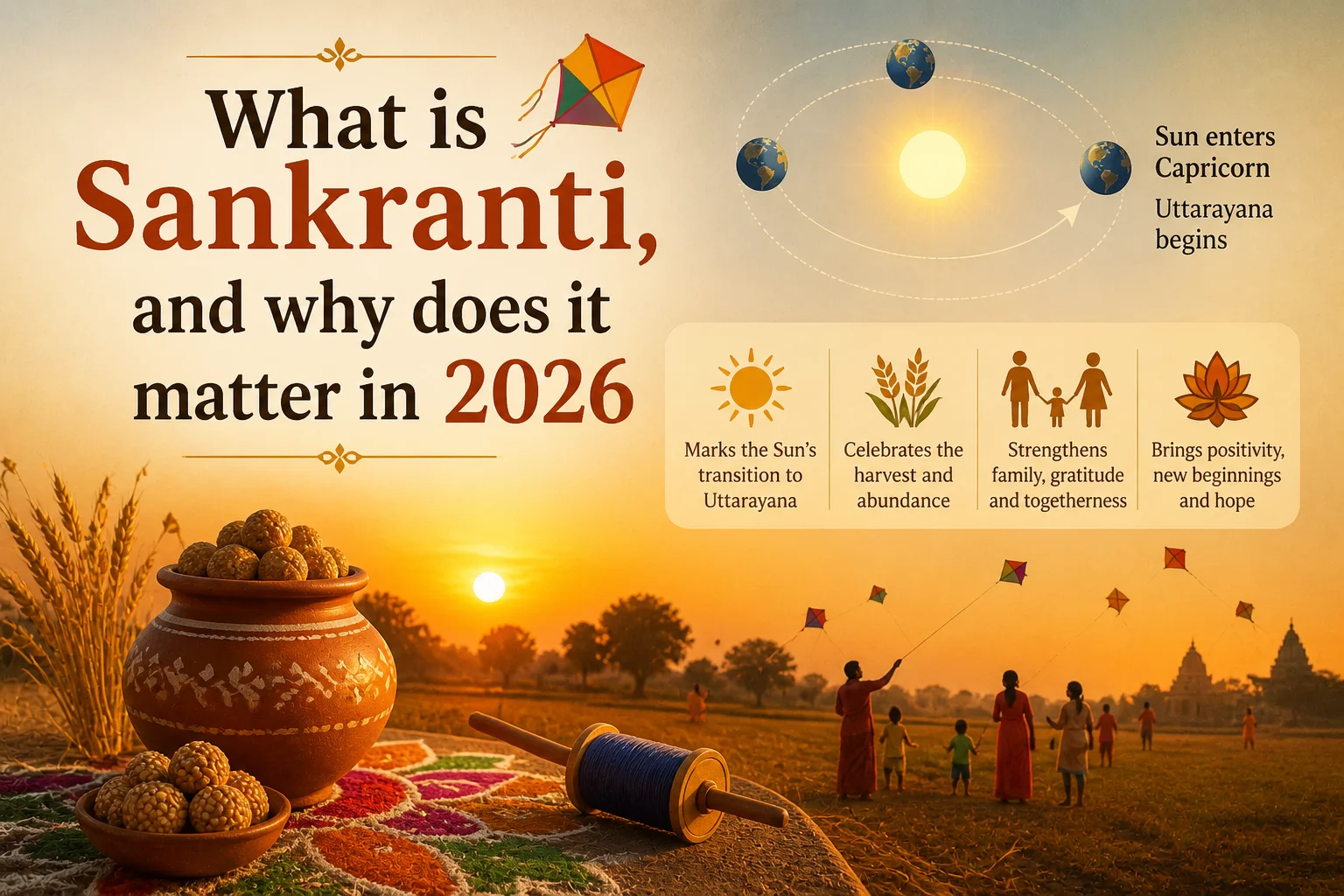
Sankranti is a sacred Hindu observance that marks the Sun’s monthly passage from one zodiac sign (Rashi) to another in the Vedic solar calendar.
It occurs twelve times each year and holds deep spiritual, astrological, and cultural significance across every region of India.
The most widely celebrated of these is Makar Sankranti, observed on 14 January, which coincides with regional festivals such as Pongal in Tamil Nadu, Uttarayan in Gujarat, and Magh Bihu in Assam.
Unlike most Hindu festivals that follow the lunar calendar, Sankranti is governed by the solar (Saura) cycle, making its dates astronomically precise and consistent year after year.
According to Vedic astrology, each Sankranti creates a powerful energetic shift, a transitional window that Vedic sages identified as ideal for karma purification, spiritual growth, and aligning one’s actions with planetary cycles.
This 2026 Sankranti Calendar is designed for devotees, Jyotishis, and spiritual seekers who want to track each monthly solar transition along with its Punya Kaal and Maha Punya Kaal, the sacred time windows most auspicious for daan (charity), ritual bathing, and Surya puja.
Whether you plan to observe fasts, give charity, or time your astrological remedies, this calendar gives you a reliable, tradition-rooted guide for the entire year.
What Is Sankranti? The Monthly Solar Transition in Vedic Tradition
Sankranti (संक्रांति) derives from the Sanskrit root Sankramana, meaning “movement” or “transition.”
In Jyotish (Vedic astrology), it specifically marks the moment the Sun enters a new Rashi (zodiac sign).
Since the Sun transits through all twelve signs in a solar year, twelve Sankrantis occur annually, each named after the sign the Sun enters, such as Makar Sankranti (Sun enters Capricorn) or Mesha Sankranti (Sun enters Aries).
Sankranti is recorded in the Vedic Panchang (Hindu almanac) and is one of the few major Hindu observances with a fixed solar basis.
Because of this, Sankranti dates remain largely consistent from year to year, unlike lunar-based festivals such as Diwali or Navratri, which shift significantly across the Gregorian calendar.
Why Is Sankranti Considered Spiritually Potent?
Vedic texts, including the Dharma Shastra and the Puranas, describe the precise moment of solar ingress — and the hours immediately surrounding it — as a period of heightened cosmic energy.
Even modest acts of prayer, charity, or worship performed during this window are said to generate amplified spiritual merit (punya) compared to acts performed at ordinary times.
This is why temples across India hold special Surya pujas on each Sankranti and why astrologers use these transitions as key markers in transit charts.
Spiritual and Cultural Importance of Sankranti Across India
Every Sankranti is an opportunity for purification, charity, and renewal.
While the astronomical event is the same across the country, each region expresses it through its own cultural and agricultural traditions.
Common Sankranti rituals observed throughout India include:
- Snan — ritual bathing in sacred rivers such as the Ganga, Yamuna, Godavari, or Kaveri
- Daan-Punya — charitable donations of food, sesame, jaggery, cloth, or money
- Japa — repetition of Surya mantras and devotional prayers
- Tarpan — water offerings to ancestors (Pitru) to honour and appease them
Regionally, Sankranti takes distinctive forms:
- North India — Makar Sankranti: sesame sweets (tilgul), holy river dips, kite flying, Surya Namaskar
- Tamil Nadu — Pongal: harvest thanksgiving with rice and sugarcane offerings to the Sun
- Assam — Magh Bihu: bonfires (meji), feasting, and communal gratitude to Surya Dev
- Odisha — Raja Sankranti & Garbhana Sankranti: celebrations honouring the Earth’s feminine energy
- Punjab — Baisakhi (Mesha Sankranti): harvest festival and Sikh New Year
In Vedic transit astrology (Gochar), Sankranti functions as an essential benchmark. Jyotishis track each solar ingress to assess planetary strength, counsel on auspicious timings, and prescribe targeted remedies for doshas in a person’s birth chart.
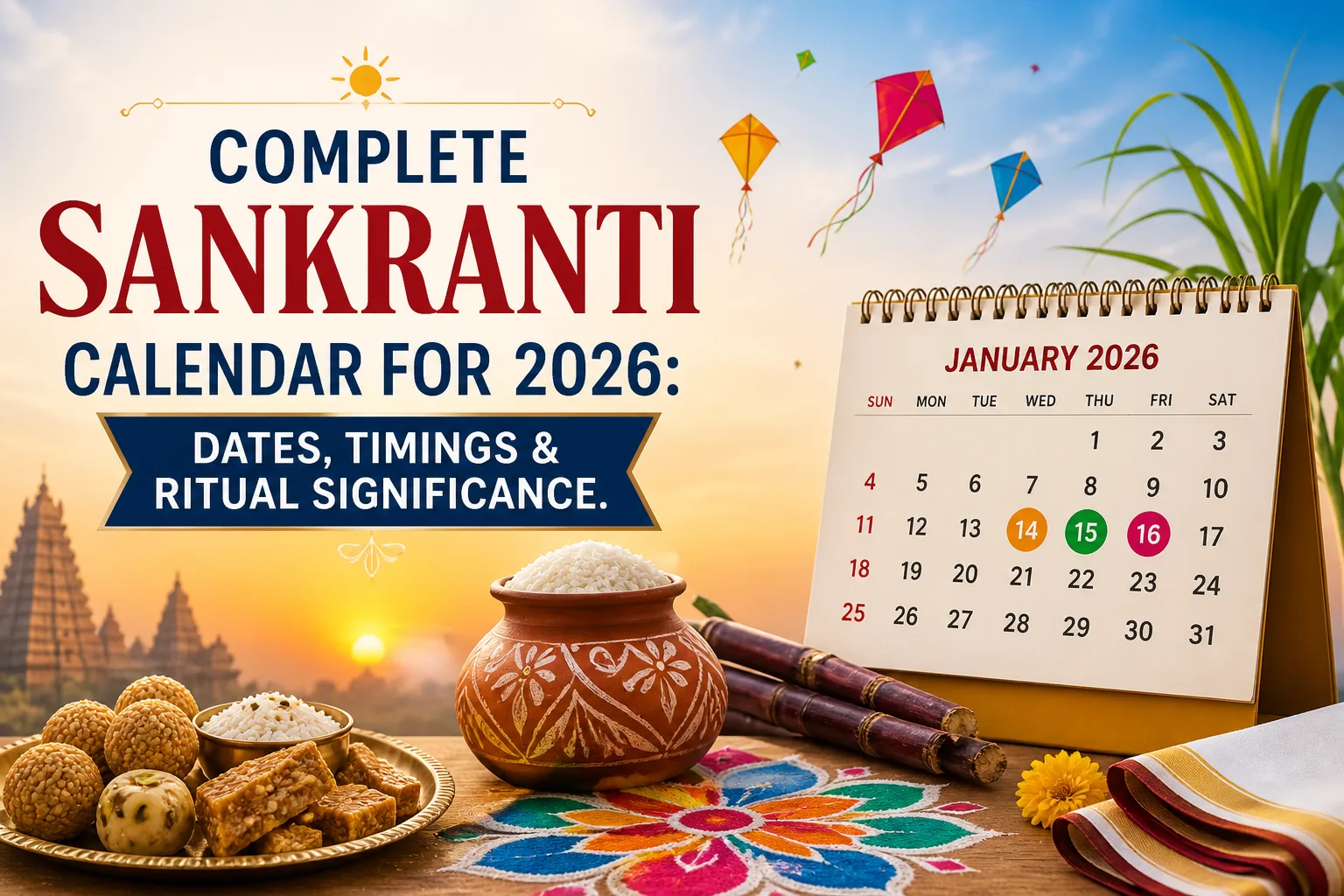
Complete 2026 Sankranti Calendar: Dates, Timings, and Ritual Significance
Each of the twelve Sankrantis in 2026 carries its own astrological character based on the sign the Sun enters.
The table below provides the full 2026 Sankranti calendar with approximate Punya Kaal and Maha Punya Kaal windows (all timings in IST), the most auspicious periods for charity, ritual bathing, and Surya puja.
Important: All timings listed are approximate, calculated using the Vedic sidereal calendar.
For location-specific precision, verify with Drik Panchang or consult a qualified Jyotishi before scheduling important rituals.
| No | Sankranti | Date | Sankranti Time (IST) | Punya Kaal | Maha Punya Kaal | Regional Names / Significance | Key Rituals |
|---|---|---|---|---|---|---|---|
| 1 | Makar Sankranti | 14 January 2026 (Wednesday) | ~08:05 PM | 07:15 AM – 08:05 PM | 07:15 AM – 09:15 AM | Pongal (Tamil Nadu), Uttarayan (Gujarat), Magh Bihu (Assam) | Sesame donations, kite flying, Surya Namaskar, tilgul exchange |
| 2 | Kumbha Sankranti | 13 February 2026 (Friday) | ~05:22 AM | 05:22 AM – 09:00 AM | — | Sun enters Aquarius (Kumbha Rashi) | Bathing in sacred rivers, offering mustard oil and urad dal |
| 3 | Meena Sankranti | 14 March 2026 (Saturday) | ~01:10 PM | 06:30 AM – 03:10 PM | — | Last Sankranti of the Vedic solar year | Water donations, reciting Surya Stotra, cleansing rituals |
| 4 | Mesha Sankranti | 14 April 2026 (Tuesday) | ~02:35 PM | 06:15 AM – 04:35 PM | — | Vishu (Kerala), Puthandu (Tamil Nadu), Baisakhi (Punjab), Pohela Boishakh (Bengal) — Vedic New Year | New Year prayers, temple visits, annadaan, new ventures |
| 5 | Vrishabha Sankranti | 15 May 2026 (Friday) | ~08:44 AM | 05:45 AM – 11:44 AM | — | Sun enters Taurus (Vrishabha Rashi) | Cow feeding, offering milk, curd, and ghee donations |
| 6 | Mithuna Sankranti | 15 June 2026 (Monday) | ~11:40 PM | 06:00 PM – 11:40 PM | — | Raja Sankranti (Odisha) — honouring the Earth’s feminine energy | Mother Earth worship, prayers for fertility and abundance |
| 7 | Karka Sankranti | 16 July 2026 (Thursday) | ~03:12 PM | 05:45 AM – 05:12 PM | — | Dakshinayan begins — Sun starts its southward journey | Pitru Tarpan, ancestor honouring, Ganga Snan |
| 8 | Simha Sankranti | 17 August 2026 (Monday) | ~07:18 AM | 06:00 AM – 10:18 AM | — | Sun enters Leo (Simha Rashi) | Fire rituals (Havan), offering jaggery and rice |
| 9 | Kanya Sankranti | 17 September 2026 (Thursday) | ~04:43 PM | 06:15 AM – 06:43 PM | — | Sun enters Virgo (Kanya Rashi) | Feeding Brahmins, donating yellow cloth, and sesame |
| 10 | Tula Sankranti | 17 October 2026 (Saturday) | ~11:05 PM | 05:00 PM – 11:05 PM | — | Garbhana Sankranti (Odisha) | Surya Arghya, offering wheat, grains, and sesame oil |
| 11 | Vrischika Sankranti | 16 November 2026 (Monday) | ~08:20 PM | 06:30 AM – 08:20 PM | — | Sun enters Scorpio (Vrischika Rashi) | Offering rice and red cloth to Brahmins, chanting Aditya Hridayam |
| 12 | Dhanu Sankranti | 16 December 2026 (Wednesday) | ~03:38 AM | 06:30 AM – 09:38 AM | — | Dhanurmas begins — the month of deep devotion to Lord Vishnu | Vishnu puja, early morning prayers, Tulsi worship, fasting |
How to Perform Sankranti Puja: Step-by-Step for Maximum Blessings
Sankranti Puja is a simple yet powerful way to align with the solar transition and receive divine blessings.
While regional customs vary, the following steps are universally applicable whether you perform them at home or at a temple.
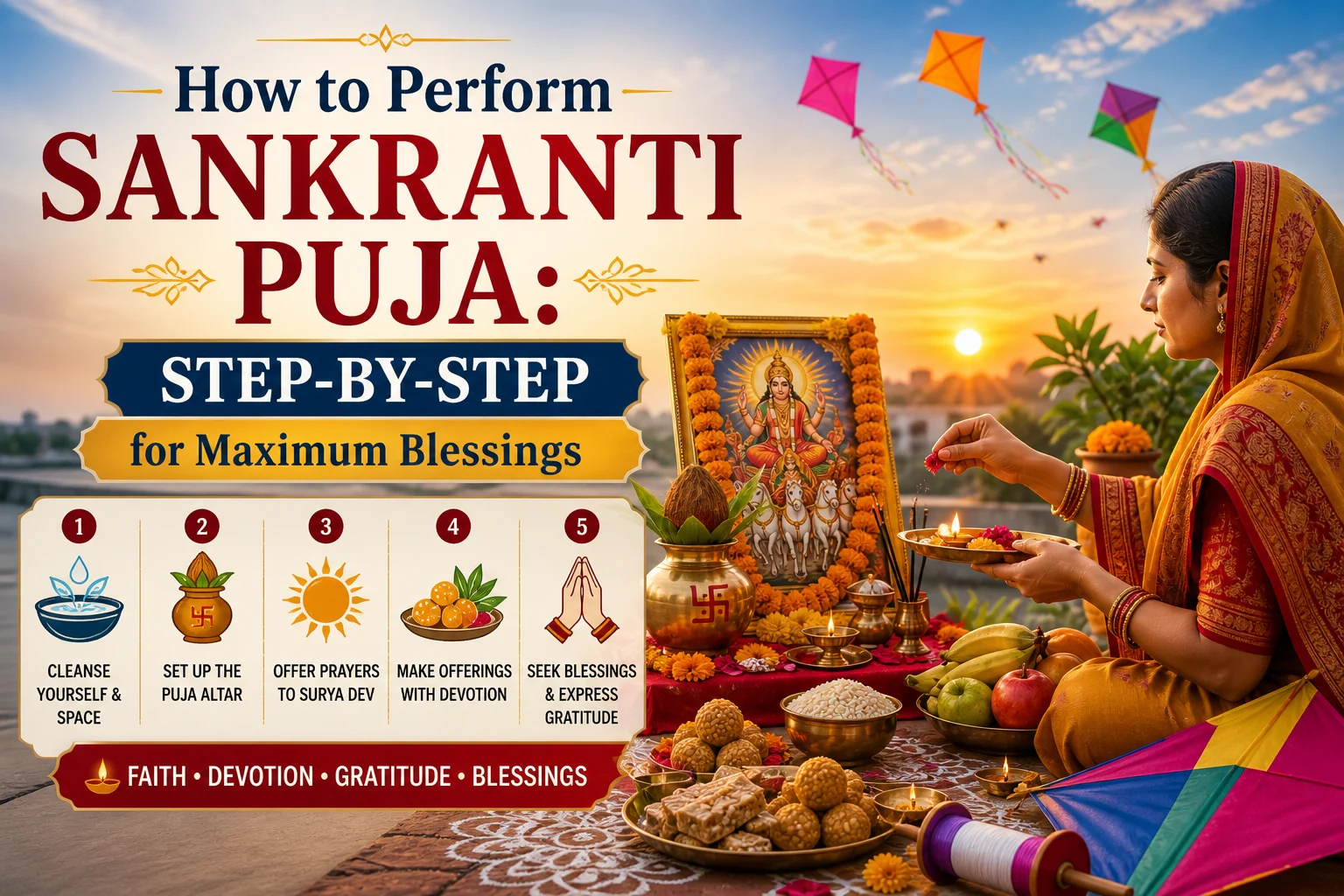
Step 1: Ritual Bathing (Snan)
Begin the day with a purifying bath before sunrise. Bathe in a sacred river if accessible, or add a few drops of Ganga Jal to your bathwater at home.
This act of Snan cleanses the body and prepares the subtle energy field for worship.
Step 2: Surya Puja (Sun Worship)
Facing east, offer Arghya (water poured through the palms) to the rising Sun while chanting the Surya Gayatri Mantra or Om Suryaya Namah.
Place sesame seeds (til), jaggery, fresh flowers, and seasonal fruits before the Sun or a Surya yantra.
This is most powerful when performed at sunrise within the Punya Kaal window.
Step 3: Daan (Charitable Giving)
Charity given during Sankranti is considered among the most karmically potent acts in the Vedic tradition.
Suitable donations include sesame, jaggery, rice, blankets, oil, or cooked food.
Feeding cows, birds, or the needy during Punya Kaal carries special merit.
The type of donation ideally aligns with the Rashi the Sun enters, for example, ghee and milk products for Vrishabha Sankranti, or grain and wheat for Tula Sankranti.
Step 4: Mantra Japa
Recite the Aditya Hridayam Stotra or the Surya Ashtakam for comprehensive spiritual benefit.
Even repeating Om Hraam Hreem Hraum Sah Suryaya Namah 108 times during Punya Kaal brings clarity, good health, and positive energy throughout the solar month.
Observing Sankranti Puja consistently each month, even in its simplest form, builds a stable spiritual anchor and amplifies the effectiveness of any astrological remedies you are working with.
What Is Maha Punya Kaal, and Why Is Daan So Important During Sankranti?
Each Sankranti carries two overlapping auspicious windows recognised in the Vedic Panchang:
- Punya Kaal — the broader sacred period spanning several hours around the Sun’s sign transition, suitable for all forms of puja, snan, and daan.
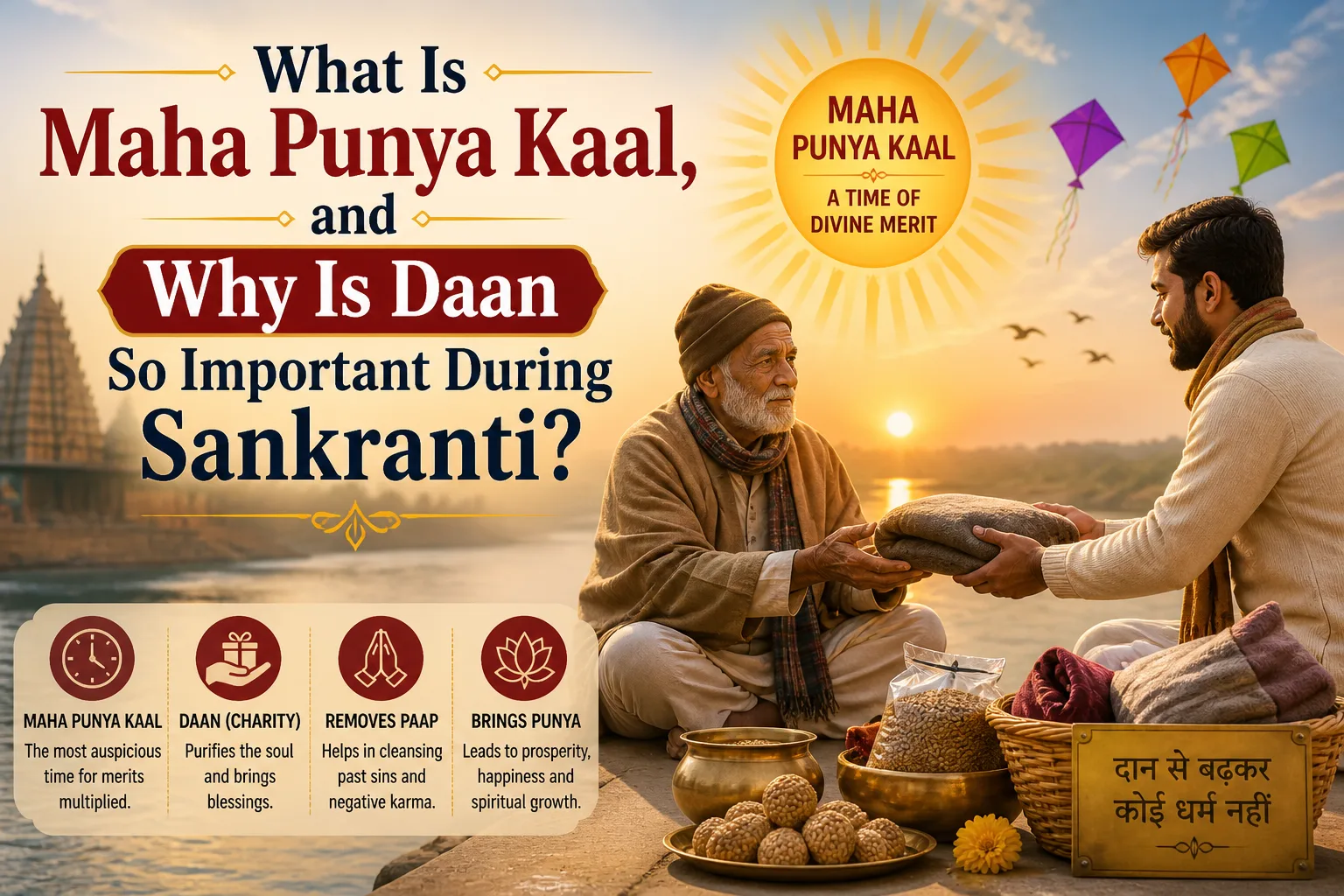
- Maha Punya Kaal — a shorter, highly concentrated window of 1–2 hours (typically at or just after sunrise on the day of Sankranti, or immediately around the transit moment) in which spiritual merit is said to be multiplied many times over.
According to Vedic scripture, any virtuous act performed during Maha Punya Kaal, whether charity, prayer, bathing, or worship, yields vastly amplified punya (spiritual merit) compared to the same act at any other time.
This is why Makar Sankranti, which has a clearly defined Maha Punya Kaal in the early morning hours, is considered the single most auspicious Sankranti of the year.
The Dharma Shastra and several Puranas specifically recommend donations of sesame (til), jaggery, blankets, and cooked food during Maha Punya Kaal for alleviating planetary doshas, resolving karmic debts, and attracting lasting peace, prosperity, and good health.
For devotees seeking measurable spiritual progress, observing Maha Punya Kaal each month is one of the most accessible and effective Vedic practices available, requiring no elaborate ceremony, only sincerity and correct timing.
Sankranti and Its Role in Vedic Astrology (Jyotish)
In Jyotish, Sankranti is a cornerstone event in transit analysis. The Sun, known as Atmakaraka, the significator of the soul and core vitality, shifts the entire energy map of the horoscope when it moves from one Rashi to another.
Each new solar sign alters the dynamics for everyone, but the effects are especially pronounced depending on where the transiting Sun falls relative to your natal Lagna (ascendant) and natal Moon sign.
Jyotishis use Sankranti to:
- Identify shifts in career, health, relationships, and finances across the solar month
- Assess the Sun’s Shadbala (planetary strength) during each transit period
- Select auspicious muhurtas for new ventures, ceremonies, and important decisions
- Prescribe targeted remedies, specific donations, mantras, or gemstones, timed to each Sankranti for maximum effectiveness
Two Sankrantis of Exceptional Astrological Importance in 2026
Makar Sankranti 14 January 2026:
The Sun’s entry into Capricorn marks Uttarayan, the beginning of the Sun’s northward journey.
This shift from the southern to northern hemisphere path symbolises the return of light, vitality, and divine favour.
Vedic tradition holds this as one of the most auspicious days of the entire year, ideal for charitable giving, new beginnings, and Surya-related remedies.
Mesha Sankranti 14 April 2026:
The Sun’s entry into Aries marks the Vedic Solar New Year in traditions across multiple states, Baisakhi (Punjab), Vishu (Kerala), Puthandu (Tamil Nadu), and Pohela Boishakh (Bengal).
Astrologically, this is the most powerful solar ingress of the year: the Sun is strong in Aries, and the energy is ideal for planting new intentions, initiating projects, and resetting one’s karmic trajectory for the year ahead.
Tracking these solar transitions gives devotees and practitioners a clear, recurring framework for taking wiser action, accessing targeted astrological relief, and flowing consciously with the natural cosmic calendar.
Conclusion
Tracking Sankranti is not merely a matter of tradition; it is a way to stay consciously aligned with the solar cycle that governs nature, agriculture, and human vitality.
Each of the twelve Sankrantis in 2026 offers a clear, predictable opportunity for spiritual purification, charitable giving, and karmic realignment.
Whether your practice is a full Surya puja, a ritual bath, a heartfelt donation, or simply a few minutes of mantra chanting during Punya Kaal, observing Sankranti keeps you in conscious harmony with dharma and the rhythms of the cosmos.
Use this 2026 Sankranti Calendar to plan your spiritual observances, time your astrological remedies, and make auspicious decisions with precision.
Rooted in Vedic wisdom and verified against the solar calendar, it is a practical tool for accumulating punya, reducing karmic burdens, and living with greater purpose throughout the year.
Let each Sankranti be your monthly reset, a moment to give, reflect, and realign with the divine solar flow.
Also Read: The Kalki Avatar of Lord Vishnu: What You Need to Know